Sweatbox Methods

Report of the General Superintendent of Police of the City of Ch
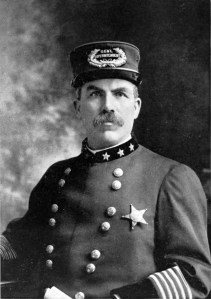
Francis O’Neill, Chicago police  (from chicagology.com)

In late summer 1902, a range of people from judges to civic leaders to everyday citizens spoke out against use of the sweatbox in Chicago. Their reaction was prompted by stories of Oscar Thompson’s treatment at the hands of Chicago’s police (Chicago Tribune, August 16, 1902, p. 1; Chicago Tribune, August 17, 1902, p. A2).

What was the sweatbox? It was not so much a thing as a process. According to the Chicago Tribune, Thompson was questioned by police for more than a week, some days for several hours on end. During that period, he was yelled at, lied to, and kept from friends, family or legal help. At least once, police deliberately kept him awake all night to try to exhaust him to the point he would talk (Chicago Tribune, August 16, 1902, p.1).

Thompson was arrested so that he could be questioned about the brutal murder of Annie Bartholin. But Thompson was not the suspect; police thought Mrs. Bartholin’s son William had killed her and his fiancé, Minnie Mitchell.  Thompson, who had boarded with the Bartholin family for more than twenty years, was just being questioned as a witness. And questioned he was. Over the next several days, as some police officers continued the search for William Batholin,  Inspector Hunt and others subjected Thompson to the “severe ordeal of questioning” that prompted public ire (Chicago Tribune, August 10, 1902, p. 1; Chicago Tribune, August 15, 1902, p.1).

But while Jane Addams, several criminal court judges, and other Chicagoans were quoted in articles deploring police use of sweatbox methods, Chicago’s mayor, Carter Harrison, Jr., was not persuaded. On the contrary, the Tribune quoted him as saying:

I think the main thing for the police to do is arrest offenders against the law. I suppose in using the sweatbox method of getting confessions, our police are using the methods and precedents established here and in other large cities (Chicago Tribune, August 17, 1902, p. A2).

Chicago’s police chief, Francis O’Neill, tried to offer reassurance. “Do you know what Chicago police do in questioning a suspect?” he asked.

They take him into a pleasant room and sit about and ask questions. It’s the same thing that the state’s attorney does, only he puts sharper points on his questions than we can. It’s exceedingly pleasant and if it is not a sociable affair, that is the fault of the prisoner, and not the police (Chicago Tribune, October 12, 1902, p. 36).

But even though O’Neill said he was not “in favor of torture,” he admitted that sometimes the police were “justified in stretching the law to its limit” in particularly serious cases. “While the police sometimes may not keep wholly within the law in these matters,” he added, “they aim to do so, and when they do stretch the law at times, then it must be remembered they do so in good cause. And we have the color of authority, also,” he added, returning to his earlier point, “because the methods we use in questioning prisoners are also used by the state’s attorney” (Chicago Tribune, October 12, 1902, p. 36).
Judge Guerin and the 3rd Degree

In late fall 1918, Judge Henry Guerin, recently elected to the bench, wrote to the Marcus Kavanagh, chief judge of the Cook County criminal courts. Guerin asked Kavanagh to order an investigation into the use of the third degree.

In his letter, Guerin complained that several defendants who had appeared in his court had testified that they were subject to “brutal treatment” by Chicago police officers and people at the state’s attorney’s office. He noted that jurors believed these claims and acquitted the suspects as a result. Guerin warned that soon it would be impossible to convict anyone in Cook County. A spokesman for the state’s attorney’s office denied that anyone there used the third degree, but welcomed an investigation into the practice. (Chicago Tribune, November 28, 1918, p. 17).

Five months later, Judge Guerin once again spoke out on the third degree after hearing testimony by Joseph Radakowitz, on trial for the murder of Fred Papke.  Radakowitz testified that after he was arrested police officers threatened to knock his brains out, to whip him, to hit him with clubs to try to get him to confess. Radakowitz also claimed that when he was questioned at the state’s attorney’s office, he was told he would be beaten up if he did not answer questions (Chicago Tribune, April 12, 1919, p.17).

Guerin refused to admit the confession into evidence. After the jury returned a verdict of not guilty, Guerin made a speech deploring Radakowitz’s claims that he had been threatened by the police and employees of the state’s attorney’s office. Such a proceeding, Guerin said,

is absolutely in violation of the law. It is a violation permitted by the police department and the state’s attorney’s office; by the men to whom we look to protect the law and to protect the citizens of this country. It is a matter that requires investigation by the grand jury (Chicago Tribune, April 12, 1919, p. 17)

The state’s attorney’s office was quick to denounce Judge Guerin, complaining that the

practice of censuring the state’s attorney and the police department before juries not only weakens the morale and intimidates these officials but tends to bring the law which the state’s attorney and the police are trying to enforce in disrepute and contempt, not only in the minds of the criminals, but in the hearts of the juries (Chicago Tribune, April 12, 1919, p. 17).

The grand jury did hear evidence about use of the third degree in a session in April 1919 (Chicago Tribune, April 16, 1919, p. 10; Chicago Tribune, April 27, 1919, 13). In May 1919, the jury issued a report on that investigation. It found “no evidence that third degree methods were used by Assistant State’s Attorney John Owen in the confession of Joseph Radakawitz (sic); rather that Mr. Owen deserves commendation for his manner of handling that case”(Chicago Tribune, May 3, 1919, p. 1).

Judge Guerin did not pursue the issue of the third degree any further. He died in a boating accident in September 1919 (Chicago Tribune, September 12, 1919, p. 1).

War on Crime

In July 1928, the Chicago Tribune told its readers that the Chicago Crime Commission felt that justice was slowly “regaining lost ground” in Chicago’s criminal courts. The Commission’s report on Chicago’s “war on crime” noted that judges were spending more time on the bench and there were more jury trials in the criminal courts. As a result, sentences for major crimes were increasing. To provide context for the Commission’s report, the Tribune offered a quick glimpse at pending cases at the criminal courts. In one, the trial of Azar Holick (or Holic) for murder, jury selection was moving promptly before Judge Joseph David. The paper expressed hope that this meant the case would quickly go to trial (Chicago Tribune, July 18, 1928).

There was reason to want a quick resolution of the case. Holick was on trial for the murder of Anthony Banas, a butcher who had been shot during the robbery of his store on a particularly violent weekend in November 1926. Banas was the only murder victim that weekend, but the extraordinary number of other crimes that weekend–30 armed robberies, 83 car thefts, and a series of bombings–did much to explain why the Crime Commission felt a war on crime was necessary (Chicago Tribune, November 29, 1926).

That July, Judge David confirmed the Tribune‘s faith that Chicago’s criminal justice system could work: Holick’s jury was empaneled in two days, heard the evidence, and promptly sentenced Holick to life in prison (Chicago Tribune, July 19, 1928; Chicago Tribune, July 21, 1928).

Then it all came apart. In December 1929, just over a year after his conviction, the Illinois Supreme Court reversed the verdict against Holick (Illinois v. Holick, 333 Ill. 337 (1929)).

What went wrong? According to the Illinois Supreme Court, quite a few things, starting with Holick’s arrest. Holick, who had no criminal record and, at age 27, lived with his mother and worked as a laborer, was taken into custody on November 21, 1927, almost a year after Banas was killed. At the time of his arrest, Holick was on the mend from serious injuries, a broken jaw and broken ribs, that had kept him in bed for three months. After his arrest, he was taken to the detective bureau and held there for a week, until he was taken to the jail on November 28 (333 Ill. 337).

At trial, Holick testified that while he was in police custody he was questioned for ten hours, and threatened by the officers who interrogated him when he denied that he was involved in the crime. He said that one officer tried to hit him with a blackjack, but missed when he was able to duck, and that other officers pulled at his hair to jerk his neck back and twisted his arms during the interrogation. Holick also testified that at the end of his extensive interrogation the officers gave him a “confession” that they had written, and told him to sign it. He said he did so because he was scared of what would happen if he refused (333 Ill. 337).

In addition to Holick’s testimony about his interrogation, his lawyers offered evidence from several witnesses who testified that the weekend Anthony Banas was being killed, Holick, his mother, and sister were visiting a family in Indiana (333 Ill. 337).

The Illinois Supreme Court concluded that Holick’s confession had not been made voluntarily, and criticized Judge David for failing to take the time to fully investigate Holick’s claim that his confession was involuntary (333 Ill. 337).


Bagging

In June 1961, detectives from Chicago’s Area 1 robbery headquarters celebrated their arrest of six young black men suspected in a series of robberies across Chicago and the city’s south suburbs. The arrests were particularly satisfying because an employee at a bowling alley they had robbed had been shot to death during one of their hold ups. Photos of suspects, McKinley Jones, Lyvon (or Layvon) Draper, Bert Wells, Louis Bean, Richard Pittman, and Charles Stevenson, were splashed across the Chicago Defender to record the capture of the “six-man terror gang” (Chicago Defender, June 8, 1961, p. 2). And two of the detectives involved in cracking the case, Howard Seaberry and Lucio Works, were singled out for praise by Howard Pierson, who commanded the robbery detail at the Prairie Avenue station (Chicago Tribune, June 5, 1961, p.9).

The case seemed cut and dried. During questioning, three of the men, Jones, Draper, and Stevenson, confessed to participating in the robbery at the bowling alley, though none admitted to firing the fatal shot. Although the others recanted their confessions, Draper stood by his. In addition, several witnesses to the various holdups identified several of the men in lineups (Chicago Defender, June 5, 1961, p. 7; Chicago Tribune, June 5, 1961, p. 9).

But just over six months later, a jury found Draper and Stevenson not guilty of murder. Both presented alibi witnesses. In addition, Lyvon Draper testified that he had only confessed after being given the third degree. He told the jury that he had been taken to the basement of the station, where officers put a bag over his head and beat him. In addition, he said that officers held his head under water twice as they pressured him to confess. When he did agree to confess, he said the officers interrogating him told him what to write (Chicago Defender, February 7, 1962, p. 7).

Fillmore station

On February 27, 1956, Isaac Berger, a white grocer, was killed during a robbery at his store. A witness said that three young black men tried to rob the store, and that Berger was killed when he tried to resist. A few weeks later, officers at the Fillmore police station on Chicago’s west side reported that they were charging two young black men, De Soto Allen, a seventeen-year-old high school student, and Robert Jackson, who was twenty-three, for the murder (Chicago Tribune, March 16, 1956, p. 2).

The two were indicted, along with a third man, Donald Wilson, who was charged with renting Jackson the gun used in the crime. At trial, Allen and Jackson denied that they were involved in Berger’s murder. The prosecution claimed that Allen and Jackson had jointly confessed to the crime. Although Jackson’s attorney objected to the introduction of the confession, the trial judge, Daniel Roberts, admitted it into evidence. At the close of trial, Judge Roberts, who was hearing the case without a jury, found Allen and Jackson guilty and sentenced them to 30 years in prison (Chicago Tribune, March 20, 1956, p. A4; Chicago Tribune, November 26, 1956, p. A6). He found Wilson not guilty.

On appeal, the Illinois Supreme Court ruled that considering the confession without first having a hearing on whether it was voluntary violated Jackson’s rights. The court sent the case back down for a hearing on whether Jackson’s confession was voluntary (Illinois v. Jackson, 31 Ill.2d 408 (1964)).

At that hearing, Jackson testified that several officers at the Fillmore station questioned him about the gun that was used during the murder. He said that during the interrogation he was taken down to the basement of the station, where a bag was placed over his head. He also claimed he was hit on the head, behind one ear, and beaten in the stomach by several of the officers. He also claimed that his request to make a phone call was ignored. His sisters testified that when they went to the station a few hours after Jackson’s arrest, they were told he was not there. His mother testified that when she tried to see her son she was not allowed to do so.

The officers denied that they hit or otherwise harmed Jackson. The prosecution also presented evidence that Jackson had not complained to anyone about any abuse before the trial. At the end of the hearing, the judge ruled that the confession had not been coerced. On appeal, the Illinois Supreme Court deferred to the trial judge’s determination that the confessions were not coerced and affirmed Jackson’s conviction (Illinois v. Jackson, 41 Ill. 2d 102 (1968)).

Not long after Allen and Jackson’s trial in 1956,  Donald Wilson filed suit against officers at the Filmore station. Wilson, a former security guard, claimed that while he was in custody at the Fillmore station he was beaten so severely by several officers that he was permanently disabled (Chicago Defender (daily edition), June 28, 1956, p. 2;  Chicago Tribune, March 20, 1956, p. A4; Chicago Tribune, November 26, 1956, p. A6).

In 1958, a federal grand jury began to investigate claims that officers at the Fillmore street station abused black youth in custody. One witness, Edward Byrd, told the grand jury that while he was questioned at the Fillmore station the officer interrogating him typed up a confession and told him to sign it. When he refused, since he had not confessed to anything, Byrd said the officer began to beat him (Chicago Defender, April 12, 1958, p. 3).

Two months later, the grand jury indicted two officers from the Fillmore station, Ernest Charles and Nathaniel Crossley. The two were charged with beating and whipping eighteen-year-old James Halsell in 1957 (Chicago Defender, June 12, 1958, p. 1). This was not the first time someone claimed to have been beaten by Charles and Crossley. In 1957, two black teens, Ermon Bryant and James Hill claimed the officers beat them to get them to confess to robbing a gas station (Chicago Defender, October 17, 1957, p. 4). In addition, Charles was one of the officers that Donald Wilson and Robert Jackson charged had beaten them at the Fillmore station in 1956. (Chicago Defender, November 27, 1956, p. A6; Illinois v. Jackson, 41 Ill. 2d 102).

Crossley went to trial in federal court in 1960 (Charles had died before the case went to trial). At trial, Halsell, Bryant, and others testified that they had been beaten at the Fillmore station.  The defense called fifteen people, mostly police officers, who testified that they never saw or heard any abuse at the station. After deliberating for ten hours, a jury of six men and six women found Crossley not guilty (Chicago Tribune, October 21, 1960, p. 20; Chicago Tribune, November 2, 1960, p. B2).


Partial Vindication

In the fall of 1946, just a few months after the protest over the arrest and mistreatment of Hector Verburgh and Desore Smet, Chicago police arrested Leslie Wakat, twice.

The first time he was taken into custody, Wakat was arrested for “investigation” and held three days until a lawyer filed a petition for habeas corpus on his behalf. After a hearing, a judge ordered that Wakat be released. A few hours later, Wakat was arrested a second time, once again for investigation. After his second arrest, Wakat was taken to Chicago’s Town Hall police station in the Lake View neighborhood.

42nd_precinct_police_station_8
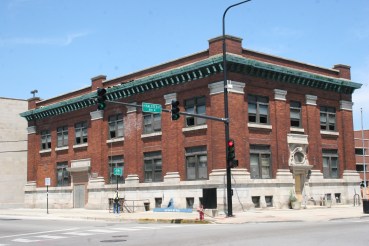
Town Hall police station, Chicago (wikimedia.org)

During his second time in custody, the police kept Wakat from his lawyer.  On September 27, three days after he was taken into custody the second time, Wakat confessed to several burglaries. He was tried before a jury, convicted, and sentenced to 10-20 years for burglary based on his confession (Illinois v. Wakat, 415 Ill. 610 (1953)).

At trial, Wakat presented evidence that his confession was the result of sustained torture by officers at the Town Hall Station. He testified that after his rearrest he was taken to the scene of his supposed crimes where an officer named Peter Harlib twisted his handcuffed arm behind his back and struck him in the face. According to Wakat, when they returned to the Town Hall Station he was taken to the station gymnasium where several officers beat him with a stick, a sandbag, and blackjacks. After spending some time being interrogated in different offices in the building, Wakat was taken back to the gymnasium and beaten again. Wakat claimed that he lost consciousness during the second beating; the next morning he was shown confessions he was told he had signed the night before, although he had no recollection of doing so (Illinois v. Wakat, 415 Ill. 610, 612-613).

There was no question that Wakat was injured, severely, while he was in police custody. A doctor at the Cook County jail examined him when he was taken to the jail after being charged. That doctor recorded that Wakat had multiple bruises, a fracture of a bone in his right hand, and injuries to his left leg and knee. Wakat was hospitalized eleven days for his injuries (Illinois v. Wakat, 415 Ill. 610, 612). At trial, the police officers who testified all swore that no one had injured Wakat. Harlib explained that Wakat’s injuries arose when they both fell down the stairs at the station during a tussle after Wakat reached for Harlib’s gun (Illinois v. Wakat, 415 Ill. 610, 614).

At trial, the jurors apparently believed the police officers. But more than five years after his original trial, Wakat had his conviction overturned in a post-conviction hearing. At the hearing, Wakat presented evidence that raised questions about whether falling down the stairs would have caused his injuries. He also put on evidence that contradicted Harlib’s claims that he had been injured as well (Illinois v. Wakat, 415 Ill. 610, 614).The judge hearing the evidence concluded that Harlib’s claims were not believable and that Wakat’s confession had been obtained through torture. That decision was affirmed on appeal by the Illinois Supreme Court (Illinois v. Wakat, 415 Ill. 610 (1953)).

Illinois decided not to retry him. Wakat then filed a civil rights claim against the officers in federal court, asserting that because

he had a criminal record he was arrested without a warrant and detained for 6 days without being charged with a crime; thus he was barred from the right to give bail. He was denied the privilege of seeing his attorney. His property and tools were taken from him without legal process. He was coerced by the application of brutal force to sign a confession which was later used in court to convict him, thus compelling him to give evidence against himself in a criminal case.

Wakat v. Harlib, 253 F.2d 59, 64 (7th Circ. 1958).

Wakat was awarded $15,000 (Wakat v. Harlib, 253 F.2d 59 (7th Cir. 1958)). A year later, the ACLU of Chicago discussed Wakat’s case in its report, Secret Detention by the Chicago Police (1959). The report also noted, pointedly, that “no disciplinary action has ever been taken against Harlib by his superiors” (p. 17).


Civil liberties and the third degree

The charge that the Chicago police hanged suspects from their wrists during interrogations was repeated during the investigation into the Suzanne Degnan murder, in 1946. Degnan, a six-year-old, went missing from her bedroom on Chicago’s north side in January 1946. The kidnapping case became a murder investigation when parts of her body were discovered in sewer pipes near her family’s home.

Chicago police detectives arrested a number of suspects. One, sixty-five-year-old Hector Verburgh, was the janitor in the Degnan’s building. Another, thirty-five-year-old Desore Smet, was the janitor for a building nearby. Verburgh’s wife was also taken into custody (New York Times, January 9, 1946, p. 1; New York Times, January 10, 1946, p. 42). The Verburghs and Smet were released without charging two days after their arrest, though Smet was arrested and then released a second time a few days (Chicago Tribune, January 17, 1946, p. 1).

On January 24, the Chicago Civil Liberties committee organized a community meeting to protest Verburgh and Smet’s treatment at the hands of the police. The 400 people who attended the event called on the police chief and the mayor to train police officers about the civil rights of suspects and dismiss those officers who used the third degree. The meeting also asked the FBI to investigate Verburgh and Smet’s claims they were subject to the third degree while being interrogated (Chicago Tribune, January 25, 1946, p. 5).

The Verburghs then sued. In their complaint, Hector Verburgh claimed that while he was in custody the police handcuffed his hands behind his back and then

by a rope or other device attached to the handcuffs behind his back, raised his body from the floor until his weight rested on his toes and shoulder sockets, causing intense pain and torture.

(Chicago Tribune, February 2, 1946, p. 4).

The Verburghs’ suit asked for $125,000; they settled their case for $20,000 (Chicago Tribune February 21, 1946, p.1). Smet, who had filed his own suit for $50,000 in damages, was paid just over $5000 in the settlement (Chicago Tribune August 17, 1946, p. 7).


Toughest cop in America

In 2001, Charles Adamson, who had been a cop in Chicago, published a biography of Frank Pape called The Toughest Cop in America. Pape had been Adamson’s mentor on the force, and the biography offered a very positive view of Pape’s sometimes controversial career.

In the book, Adamson offered accounts of many of the cases that were solved by Pape and his colleagues on Chicago’s robbery squad. One such tale involved Edward Damiani, who was arrested with Alvin Krause and charged with killing a currency exchange employee during a robbery in 1943. Damiani was put through a twelve hour interrogation by the detectives before he confessed. Adamson quoted one of the detectives involved in the interrogation as telling another detective that “you wouldn’t want to go through what that punk did, no way” (Adamson p. 20).

At Damiani’s trial, Pape testified about Damiani’s confession. It was admitted into evidence over the objection of Damiani’s attorney, who argued the confession should be excluded because Damiani had been subjected to the third degree to coerce him into confessing (Chicago Tribune, February 6, 1944, p. 16).

Then Damiani took the stand to elaborate on what that meant. Most notably, he claimed that during the twelve hour interrogation he was hanged by his cuffed wrists from a door. During his testimony, Damiani also admitted under oath that he released the gas that asphyxiated the currency exchange worker, killing her (Chicago Tribune, February 9, 1944, p.1).

Damiani’s admission proved more important than his claim of torture. He was convicted and sentenced to life in prison (Chicago Tribune, February 11, 1944, p.1).

Suspended from a door

Arthur LaFrana was arrested on December 30, 1937. Over the next several days, he was questioned about a number of robberies and confessed to two, one involving a bakery and another involving a liquor store. On December 31, the police began to interrogate him about another robbery, of a movie theater, where a cashier was murdered in the course of the crime. LaFrana denied that he was involved in the movie theater robbery for several days. Finally, on January 3, LaFrana admitted that he had robbed the theater and killed the cashier in the process and signed a confession to that effect.

When he was tried on the murder charge, LaFrana tried to prevent his confession from being admitted into evidence. He claimed that he had only confessed after being subject to an extensive third degree. He testified that on January 3 he was told that two other men had confessed and implicated him in the crime. When he continued to deny that he was involved, the captain who was interrogating him

hit him repeatedly with his fists and with a night stick. His hands were then handcuffed behind him and he was blindfolded. A rope was put in between the handcuffs and he was suspended from a door with his hands behind him and his feet almost off the floor. While he was hanging from the door, he was repeatedly struck until he lapsed into unconsciousness. When he lost consciousness he was taken down from the door and when he regained consciousness he would be hung back up on the door and again questioned and struck. After about fifteen minutes of this treatment he agreed to sign a confession.

Illinois v. LaFrana, 4 Ill. 2d 261, 265 (1954)

LaFrana also presented evidence that when he was booked at Cook County Jail on January 11, 1938, the county physician noted on his intake form that LaFrana had a black eye and abrasions on both his wrists. LaFrana also put into evidence a newspaper photo that showed he had several cuts on his face and a black eye. 4 Ill. 2d at 267-268.

The captain who obtained LaFrana’s confession took the stand and told a very different story. He claimed that LaFrana tried to escape and had to be subdued as a result. But he denied that LaFrana had been subject to any other harm at the station, and two other officers who testified agreed that they never saw LaFrana beaten. 4 Ill. 2d at 266. The trial judge, Thomas Kluczynski, denied the motion to suppress the confession and admitted it into evidence. LaFrana was convicted and sentenced to life in prison.

After a lengthy series of appeals, his case reached the Illinois Supreme Court. In November 1954, that court reversed LaFrana’s conviction for murder on the ground that the evidence presented by the prosecution at his trial did not disprove LaFrana’s claim that his confession had been coerced.

More on the water cure

Another claim involving the water cure arose in 1962. Alex Gordon, along with several other Black men, was arrested in Chicago and accused of kidnapping. Before trial, his attorney, James Montgomery, claimed that the officers in the detective division who interrogated Gordon tortured him in an effort to make him confess. Speaking for his client, Montgomery charged the police pointed a gun at him during interrogation, hung him from his wrists until his skin peeled, and held his head under water for long periods (Chicago Defender, March 3, 1962, p. 2; Chicago Defender, May 9, 1962, p. 5). Four men were indicted for the crime; three pled guilty and the fourth was found guilty of robbery. Gordon was not among them (Chicago Tribune, October 30, 1962, p. 4).